
Why Do My Dog's Ears Smell? What's Normal and What's Not
What's That Smell? — A Dirty Dog Series on the Weird, Gross, and Totally Normal — Part 2
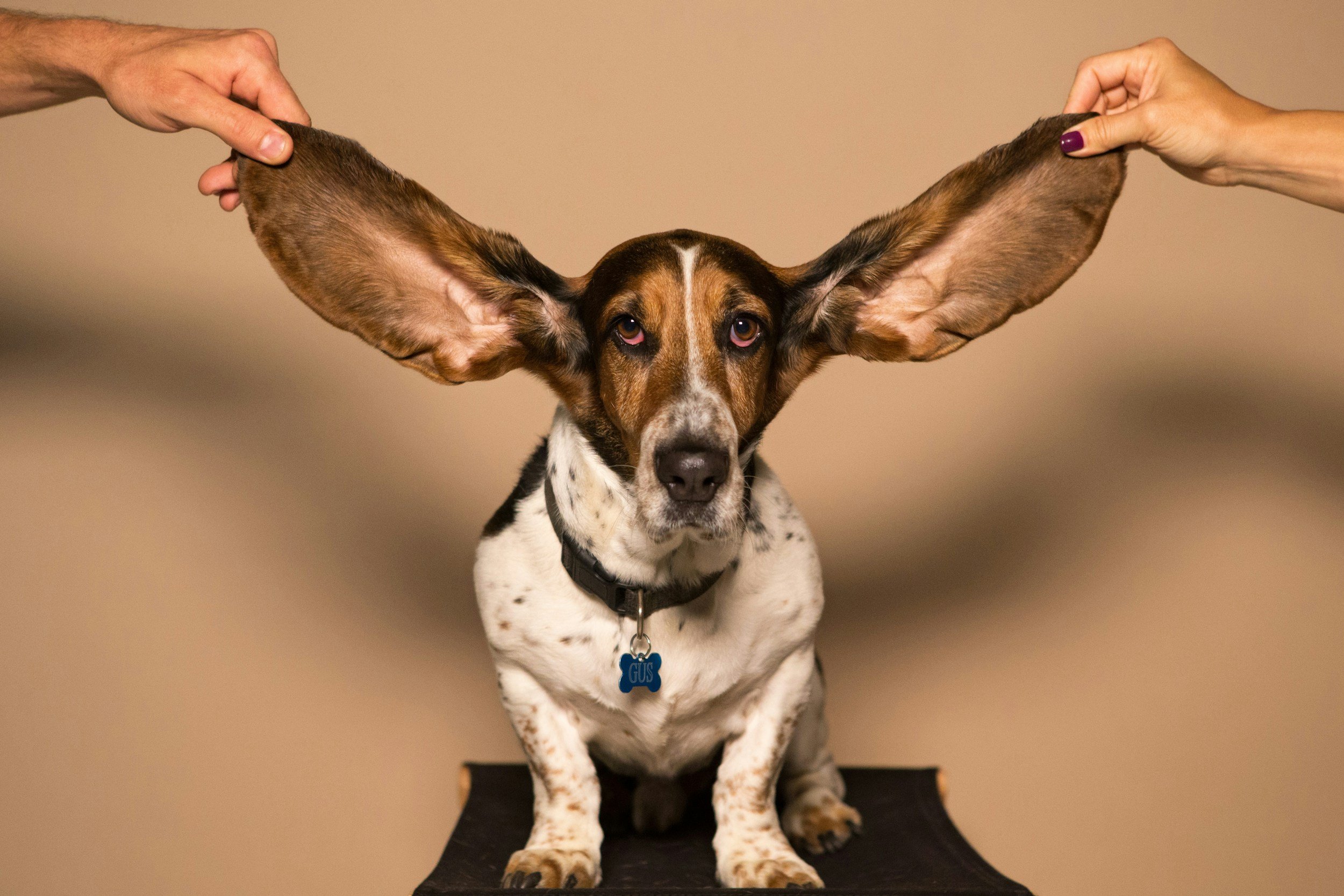
Dogs' ears are warm, dark, and not especially well-ventilated. That environment is basically a welcome mat for yeast and bacteria, which means a little smell is par for the course. The question isn't really whether your dog's ears smell — it's whether what you're noticing is normal or something that needs attention.
Here's how to tell.
What Normal Ears Smell Like
Healthy dog ears have a mild, slightly waxy smell. It's not exactly pleasant, but it's not alarming either. If you've been around dogs long enough, you probably know it without being able to describe it. A light, faint odor after a bath or a romp in the heat? Normal.
What's Not Normal
The smells that signal a problem tend to be more specific:
Musty or yeasty — This is usually a yeast overgrowth. You might also notice dark brown discharge, your dog shaking their head more than usual, or scratching at their ears.
Sweet or fruity — Counterintuitive, but this can also point to yeast.
Foul or rotten — This leans toward a bacterial infection and warrants a vet visit sooner rather than later.
Strong enough to notice from across the room — Regardless of the specific smell, intensity matters. A smell that hits you before you've gotten close is a red flag.
Why Some Dogs Are More Prone to Ear Issues
Floppy-eared breeds like Basset Hounds, Cocker Spaniels, and Goldendoodles are at higher risk because their ears trap heat and moisture. Dogs that swim a lot or spend time outdoors in humid conditions are also more susceptible. So are dogs with allergies — ear infections are one of the most common allergy symptoms in dogs.
If your dog is getting frequent ear infections, it's worth talking to your vet about underlying causes rather than just treating each flare-up individually.
What You Can Do at Home
Light, regular ear cleaning is helpful for most dogs — but the key word is light. Over-cleaning can irritate the ear canal and actually make things worse. A vet-approved ear cleaner and a cotton ball once or twice a month is usually sufficient for a healthy dog. Never use cotton swabs inside the ear canal.
If you notice discharge, significant odor, or your dog is clearly uncomfortable, skip the home cleaning and go straight to the vet. Cleaning an already-infected ear can push debris deeper and complicate treatment.
When to See a Vet
Strong or unusual odor
Discharge (especially dark brown or black)
Redness or swelling inside the ear
Head shaking or pawing at ears
Sensitivity when you touch near the ear
Any one of those is a reason to call. Ear infections don't tend to resolve on their own and can become serious if left untreated.
Your dog can't tell you their ears hurt — they can only shake their head and hope you notice. Keeping an eye (and a nose) on their ears is one of the simpler things you can do to stay ahead of a problem. If you'd like us to take a look during their next grooming appointment, just ask.